_edited.jpg)


Ostuni Walking Tour 2026: Best Routes, Hidden Gems & Local Tips

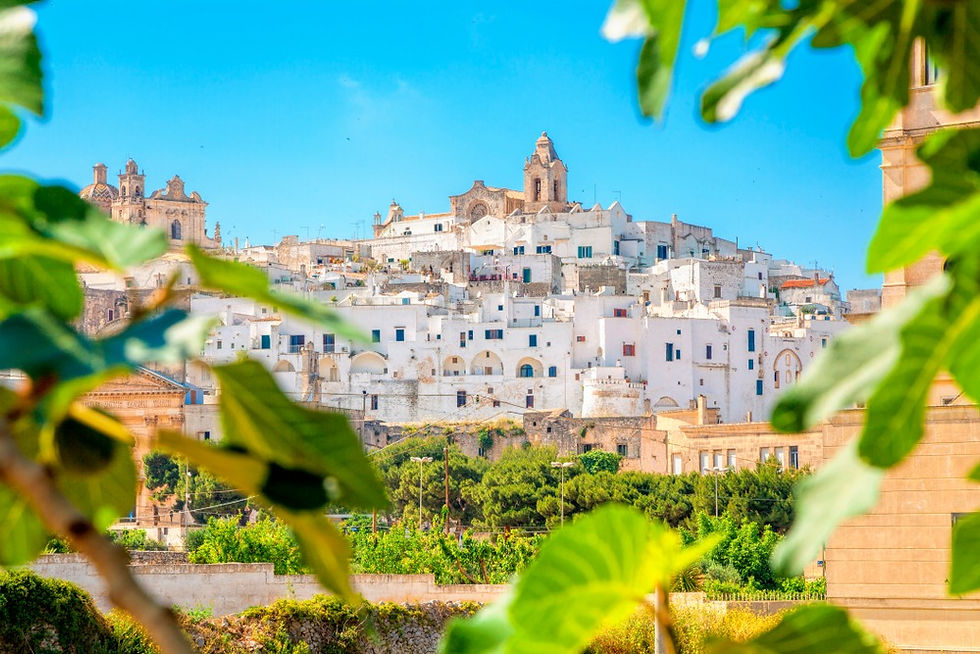
There's a moment, usually about ten minutes into the old town, when Ostuni stops you mid-step. You're standing in an alley barely wide enough for two people, walls blinding white in the morning sun, a cat watching you from a terracotta pot overflowing with geraniums, and somewhere above you, the cathedral sits at the top of the hill like a punctuation mark at the end of a very long, beautiful sentence. This is what people mean when they call Ostuni the White City.
An Ostuni walking tour is one of the most rewarding things you can do in Puglia and one of the simplest. No ticket queues, no coaches, no fixed schedule. Just good shoes, a loose plan, and a town that was built for wandering.
Here's everything you need to walk it well in 2026.
Why Ostuni Deserves More Than a Drive-Through
Most visitors see Ostuni from a car window on the way to a beach. That's a genuine shame. The hilltop old town, a tightly wound labyrinth of whitewashed stone perched 218 meters above the Adriatic plain, is one of the most photogenic, most atmospheric, and most historically layered places in all of southern Italy.
It takes between 1.5 and 2 hours to walk the medieval streets properly and reach the highest viewpoints. Give yourself a morning, and you'll leave wondering why you didn't stay longer.
The Best Ostuni Walking Tour Route: Step by Step
Start: Piazza della Libertà
Every walk through Ostuni begins here, in the town's main square at the base of the old city. It's busy, lived-in, and full of the particular noise of a southern Italian piazza: scooters, conversation, and the scrape of café chairs on stone.
Two things are worth pausing for before you climb:
The Town Hall — the building was originally a Franciscan convent, and the bones of the cloister are still visible if you know what to look for
The Obelisk of Sant'Oronzo — an 18th-century column honouring the town's patron saint, rising from the square with confident baroque flair
From Piazza della Libertà, follow the main lane upward into the centro storico. The streets narrow almost immediately.
The Centro Storico: Getting Pleasantly Lost
The old town of Ostuni was designed with defense in mind. The streets wind, double back, and dead-end, deliberately built to confuse invading forces. In 2026, they confuse tourists instead, which is considerably more enjoyable.
What makes the centro storico worth every minute of wandering:
Cobblestone alleys so narrow the sky becomes a thin blue stripe above you
Doorways painted in faded blues and greens, framed by climbing plants and ceramic house numbers
Archways connecting buildings overhead, creating tunnels of cool shadow in the summer heat
Unexpected courtyards that open behind unremarkable doors, small gardens, chairs, and the sound of someone cooking
Residents are going about their actual day, because Ostuni's old town is a real neighbourhood, not a preserved set
Take your time here. There's no wrong turn.
Arco Scoppa: The Arch Worth Finding
Midway through the old town, look for the Arco Scoppa, an elegant stone archway that connects the Bishop's Palace to the adjoining seminary. It's subtle enough that many visitors walk under it without realizing what they're looking at.
Stop here. The framing of the arch against the buildings behind it, usually with a strip of blue sky above, is one of the best photographs in Ostuni. Come early in the morning when the light falls at an angle and the streets are quiet.
The Cathedral of Santa Maria Assunta: The Hilltop Reward
At the very peak of the hill, the Cattedrale di Santa Maria Assunta delivers everything it promises. Built in the 15th century, the facade is a striking mix of Gothic and Romanesque styles, with stone tracery, intricate carvings, and one of the largest rose windows in southern Italy.
Key things to notice:
The rose window — elaborate, asymmetrical, and genuinely impressive up close
The carved stone facade — look for the details in the doorway arches; the craftsmanship is medieval and precise
The interior — cooler than the streets outside, with a baroque interior that contrasts beautifully with the Gothic exterior
The cathedral is typically open to visitors in the mornings. Check locally for current hours before you go.
The Panoramic Viewpoints: The Whole Reason to Climb
From the area around the cathedral and the terraces just below it, the views over Puglia are extraordinary. On a clear day, and Puglia has a lot of clear days, you can see the following:
The Adriatic Sea stretches east, deep blue and glittering
Centuries-old olive groves covering the plain below in silver-green
The coastline toward Fasano and Brindisi to the north and south
The Itria Valley inland, with hints of the trulli country visible in the landscape
This is the payoff for every uphill step. Sit here for a while. There's no rush.
Local Tips That Actually Make a Difference
Wear proper shoes — the cobblestones are smooth, steep, and uneven. Sandals and heels are asking for trouble. Comfortable walking shoes are non-negotiable
Go early — in July and August, the old town fills with visitors by mid-morning. Arriving at 8 or 9am gives you the streets almost to yourself
Try the olive oil — several small producers in and around the old town offer tastings of local extra virgin olive oil. Ostuni sits in the heart of Puglia's olive country; don't leave without trying it
Wine stops along the route — local wine bars in the centro storico serve Primitivo and Negroamaro by the glass, often with small plates of local cheese and cured meats
Best light for photography — early morning for the alleys (soft, directional light, no crowds); late afternoon for the viewpoints (golden hour over the Adriatic is exceptional)
Don't over-plan — the best moments in Ostuni are unscheduled. Leave gaps in your route
Guided vs Self-Guided: Which Is Better?
Both work well, but for different travelers.
A self-guided walk suits confident explorers who enjoy getting slightly lost and discovering things independently. The old town is small enough that you won't go too far wrong, and the cathedral is always visible above you as a navigation point.
A guided Ostuni walking tour is worth it if you want the stories behind the stones, the history of the Norman settlement, the role of the church in the town's layout, and the meaning behind architectural details you'd otherwise walk past. A good local guide transforms the experience from a pleasant stroll into something you'll actually remember in detail.
For the most personalised experience in Puglia, Classic Puglia designs private walking itineraries that combine Ostuni with a broader regional context, connecting the town to its landscape, its food culture, and the wider history of the Itria Valley. It's the difference between seeing a place and genuinely understanding it.
Ready to Walk Ostuni in 2026?
Whether you're planning a solo morning in the white city or a fully guided private tour as part of a wider Puglia itinerary, Ostuni rewards every bit of effort you put into it. Book your Ostuni walking tour early for 2026. The best private guides fill up months ahead of the summer season, and this is one experience that's genuinely better with the right person leading the way.
Lace up. Head uphill. Let the White City do the rest.
Frequently Asked Questions
Q: How long does an Ostuni walking tour take?
Most Ostuni walking tours take around 1.5 to 2 hours, depending on the route and stops for photos, cafés, or local tastings.
Q: Is the Ostuni walking tour suitable for all fitness levels?
Yes, but the old town has hills and cobblestone streets. Comfortable shoes are recommended for an easier walking experience.
Q: What is the best time of year to visit Ostuni?
The best time to visit Ostuni is from April to June and September to October, when the weather is pleasant, and the streets are less crowded.
Q: Do I need a guide for an Ostuni walking tour?
You can explore Ostuni on your own, but a local guide helps you discover the town’s history, hidden corners, and cultural highlights more enjoyably.


Comments